
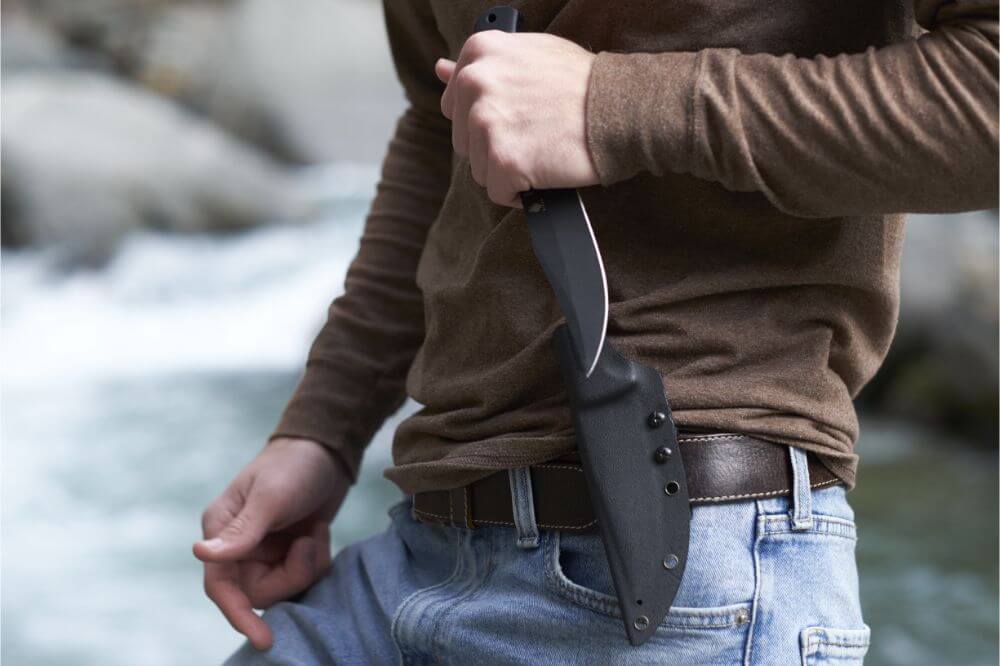
A survival knife is a piece of equipment no adventurist or camper should leave home without. With proper training and some knife skills, people can obtain pretty much anything in the wild to help them survive in a hostile environment using the best survival knife.
That’s why selecting the right knife is vital, and it’s understandable if you want to take some time to make the correct decision. We’ve compiled our list of five top survival knives on the market. Read on to find out what we consider to be traits for the best survival knife and what to look for when deciding which one is better suited for you.
Comparison Chart

Schrade SCHF9 12.1in High Carbon Steel Fixed Blade Knife with 6.4in Kukri Point Blade and TPE Handle for Outdoor Survival, Camping and Bushcraft
Best Survival Knife Reviews
KA-BAR Becker BK2 Companion
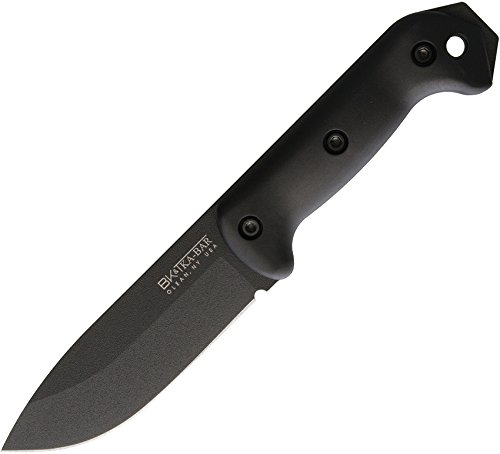
The KA-BAR Becker BK2 is one of the quintessential camping knives and has been widely considered the go-to survival knife in previous years. It’s designed by Ethan Becker, one of the most prominent names in the industry. Newer models haven’t pushed this piece out of favor, and it’s one of the better picks when looking for the best survival knife.
Highlights and Specs
This knife has an overall length of 10.625 inches, with an about 5.25-inch, full-tang blade. It weighs 16 ounces. The size and weight of the knife mean it’s generally easy to wield no matter how large your hands are, and the grip is specially designed to be comfortable. However, it’s larger than other knives in its category and can be weightier than pictures might suggest.
It’s an excellent tool for short trips or camping outdoors, but full-on survival gear can start weighing a lot when all things are considered. The blade is also about .25-inches thick, giving it the ruggedness needed to survive misuse. In addition, the knife has been powder-coated for additional rolling resistance.
The Good
The KA-BAR Becker is an exceptionally versatile survival knife, and its capabilities far outmatch its footprint. The thick, durable edge can cut through baton wood and be used to whittle up tinder to start a fire. It can cut through frozen food without a problem, making it an excellent all-around camping tool.
The knife also has excellent ergonomics, with the handle providing a firm but comfortable grip. The sheath is also one of its better points, allowing you to carry the knife on a backpack without worrying about it falling off.
The Bad
While this is a great knife to have around for camping trips and adventures, it doesn’t really excel at anything. So while it’s one of the best survival knife options on the market, users that need a dedicated carving, whittling, or chopping knife will need to look elsewhere.
Pros
- Full-tang durable knife
- Incredibly powerful for its size
- Excellent ergonomics and sheath
Cons
- Average results for delicate tasks
- Can be outperformed by a specialized tool
Gerber LMF II

The Germer LMF II is an authentic military survival knife, and its excellent specs and versatility truly make it stand out from the competition. It was initially designed to free personnel from downed aircraft. It’s a made-in-USA product that is more affordable than you might initially think, considering how excellent the build quality is.
Highlights and Specs
This three quarter tang knife is about 10.6-inches long, with a 4.85-inch long blade. That makes it one of the shortest blades, but don’t let that fool you into thinking it’s subpar. The high-quality stainless steel blade coupled with a glass-filled nylon handle makes for a sturdy knife that can withstand hammering. In addition, the blade has a partially serrated edge before it transitions into a drop point.
The Gerber comes with leg straps to facilitate outdoor use. However, its 12-ounce weight makes it somewhat tricky to pack with you at all times. But the sheath can be worn on the belt, further enhancing its usability.
The Good
The blade might look small, but it’s specifically designed to be durable and slice through ropes and lines. The handle is extremely comfortable to grip, meaning your hand won’t get tired quickly during use. The stainless steel blade will remain sharp without much upkeep, and the serrated edge helps immensely in tough situations.
We also like the versatility of the strap and sheath. Being able to position the knife on the belt or to the leg straps makes it always in range and ready.
The Bad
One of the significant downsides of the blade is that it’s pretty short. Considering it’s below 5 inches, the blade might not work for some situations that require a longer blade.
It’s also quite heavy for its size, making it somewhat bulky to lug around everywhere with you at all times. However, it’s a small sacrifice to make when using one of the best survival knife models.
Pros
- Large blade surface area
- Excellent grip
- Versatile strap and sheath
Cons
- Might seem too short
- Serrated edge needs more maintenance for sharpness
Fallkniven A1
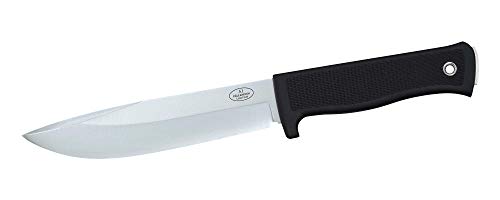
The Fallkniven A1 is a medium-sized survival knifed suited for the faraway outdoors. It’s designed primarily to be versatile but can stand on its own against more heavy-duty knives on the market. It looks and feels stunning, and it’s not a secret that it deserves a spot on the best survival knife list.
Highlights and Specs
This 12-ounce, 11-inch knife is on the longer, heavier side for its class. The 6.3-inch blade has plenty of options to choose from, although it doesn’t have the serrated edge.
The sweeping belly and drop point allows for an enhanced puncture capability while not sacrificing strength and durability. The handle is made from high-density polymer (Kraton), and the blade is full-tang. It’s a relatively simple yet effective design that emphasizes function over form. The rubbery polymer allows for partial shock absorption.
The A1 comes with a choice between leather and polymer sheaths, both with lefty options.
The Good
One of the best features of the A1 is the comfortable yet sturdy grip. It’s safe to say that the designers know their way around survival knives. The A1 allows the handler to work without tiring easily and delivers the results you need in the wilderness. The blade is exceptionally sharp, and the specially designed curve works to provide maximum cutting power.
Of course, the knife only gets better as you do more survival skills training, and developing a proper technique will make it truly shine. However, even novice users can get excellent mileage out of this model.
The Bad
The sheath is somewhat flimsy. While there are a few options to choose from, neither felt great to use. However, it gets the job done even though it lacks some customization and strapping options.
Pros
- Extremely effective for beginners
- Sharp point perfect for piercing
- Solid sheath options
- Comfortable grip
Cons
- Sheath is somewhat flimsy
- No horizontal carry options
Gerber StrongArm

Another strong contender from Gerber, the StrongArm is in many ways a successor of the LMF II. However, don’t let the similarities stop you from making an early conclusion about what this knife can offer. The StrongArm is built for sheer power, making it excellent for the outdoors.
Highlights and Specs
Coming in at only 7.2 ounces, this is one of the lightest models on this list. The blade is 4.8-inches long, while the overall knife is 9.8 inches. The blade is made from stainless steel (420C) and is coated in a protective corrosion-resistant finish.
The handle is made from glass-filled nylon covered with rubber to provide a firmer grip and prevent slips. The handle also has a small, sharp pommel to use when cracking windows and a lanyard loop.
One of the best innovations is the sheath, designed to adapt to the user. You can mount onto a MOLLE, strap the knife to the leg, or use the horizontal belt loop. The sheath uses both passive and active retention methods to ensure the knife stays in its place.
The Good
Although this knife might seem small, it can pack quite a punch. The StrongArm has been clearly built for strength and durability, and the build quality emphasizes that.
The rubber mold on the handle makes the knife perfect when using gloves or when your hands are wet or cold, allowing you to make full use of the knife’s power in hostile weather. The knife is also extremely light, although you can’t really conceal it on your body easily.
The Bad
The 420C steel is one of the cheapest available materials and can get dull after a while. However, it can get an incredible edge if you’re skilled with a sharpening stone. Additionally, it needs a bit of upkeep to keep the knife from going rusty when the coating wears off.
Pros
- Budget-friendly option
- Versatile sheet and strap
- Very compact and powerful
Cons
- Will lose the edge over time
- Needs more upkeep
Schrade SCHF9
We end with one of the largest available knives in the arsenal. This contender for the best survival knife can replace a smaller ax and a knife when in a pinch.
Highlights and Specs
With 12-inches of overall length and a blade that’s a whopping 6.4-inches long, this is a medium-large knife that can be a valid compromise when you don’t have a hatchet on hand. The full-tang blade has a blunted tip and a plain edge with a deep grind to round it up. The steel used for the blade is high-quality 1095 high-carbon, one of the most popular materials for survival knives.
The handle has three finger choils and is coated in hard Kraton, providing grip in wet or cold weather and with gloved hands. It’s also not hard on bare fingers. The Cordura sheath that comes with the SCHF9 is lightweight but durable, with a plastic insert to keep the knife stable.
The Good
The blade’s handle is top-notch. It provides the perfect amount of grip while being comfortable to use with bare hands. The finger grooves are suitable for users of all sizes, and the rubber doesn’t make the knife slippery in wet conditions.
The blade has enough thickness and weight to it, but it doesn’t feel like a 16-ounce knife while handling it. The knife’s size and strength make it an excellent replacement for a hatchet or small ax when you want to travel light.
The blade’s edge is incredibly versatile, and the fact that it doesn’t have serrations means it’s much easier to use and keep sharp.
The Bad
The high-carbon steel used for the blade is treated against rust, but the coating will wear out eventually. As a result, users need to maintain the blade with occasional oiling and proper storage.
Pros
- High-carbon steel maintains sharpness
- Ergonomic handle
- Plain edge with a blunted tip for maximum versatility
Cons
- Steel will need proper maintenance and storage
- Heavy and large compared to medium-sized knives
Buyer’s Guide
Getting to know what makes a good survival knife is the best way to make the right choice. The best survival knife for you will be comfortable, durable, and powerful enough to last in the outdoors and get every task done without a hitch.
There are a few notable things to consider when making a purchase, and the quality of the knife you choose can largely depend on the budget allocated for it.
Types of Survival Knives
Survival knives are typically sorted by their materials, shape, size, and purpose. However, each person will find a knife that’s suitable for them. Here are some of the most common survival knife types:
Fixed Blade Knives
All the knives on our list are fixed blade knives. They are versatile, durable, and can be used as a primary survival tool if you’re in a pinch.
Rambo Knives
These survival knives, named after the eponymous movie character, have one plain edge, while the other is serrated to allow for more versatility.
KA-BAR Knives
The Ka-Bar knives are named because someone used an early model to kill a bear in the wild. They have a leather handle and a single edge, typically with a serrated part near the handle for versatility and sawing.
Kurki
The kukri is an enormous blade hailing from Nepal. It has a distinctive inward curve and is primarily designed for slicing and beheading.
Karambit
The karambit began as a tool for cutting grass in Southeast Asia before it developed into a weapon. It has a superb curve reminiscent of the claws of the local tiger. It has a noticeable finger hole at the hilt base to allow for more leverage while cutting and piercing.
Machetes
Machetes are familiar to pretty much anyone due to their significant role in adventure movies. They are large and can slice through the flora with their paper-thin but very sharp blades.
Boot Knives
Boot knives are smaller, double-edged knives that can fit inside boots or are worn inside a pants leg. They are meant to be used as a last resort and an element of surprise, but their small size is perfect for quick punctures.
Folding Knives and Multitools
The tactical folder is a survival knife that can fit inside a pocket and always stay with you outdoors. It’s light, compact, and powerful for its size, but it will lack the robustness and strength of a proper survival knife. Some folding knives come with additional tools to make life a bit easier for camping trips.
Swiss Army Knives
More like a folder of tools than a knife, there are countless variations of the Swiss army knife. Some models have more than thirty tools tucked away into a pocket-sized piece. So if you need something on the go, the Swiss army knife probably has the tool for it.
Blade
When it comes to blades, pricier is usually better. Several types of steel, typically stainless or high-carbon, are used for fixed blades and other survival knives. Higher quality stainless steel will last longer, maintain an edge better, and is less susceptible to rust and deterioration over time.
Carbon steel can start fires easier and is durable but is prone to rust if not treated properly and maintained by the user. No matter the type of steel used, you need to keep the blade in a dry environment and clean it regularly to prevent rusting.
Fixed blade knives come with either a plain or serrated edge. Both have their advantages. The plain edge is perfect for shaving, peeling, or skinning. It is also easier to maintain and can be sharpened much quicker for better results. On the other hand, the serrated edge cuts and saws much faster and deadlier, and even a duller blade will produce better slices.
No matter which you choose, it is usually best to stick to a knife with a single blade. Although double-edged knives might look better and slice or pierce faster, they are inconvenient when you need to apply more pressure on one of the blades.
Size
There’s no one size fits in survival kits. Knives will typically have different sizes between the blades and the handle, and it’s usually up to the user to pick the combination that works best for them. If you have a larger hand, you’ll obviously need a medium-to-large knife for any basic task.
A larger survival knife might allow you to do more things effectively, like a hack at a small tree, but it will make accessibility and wearability a challenge. Survival knives are meant to be worn in an easy-to-reach area, which might not be feasible with a knife that’s over a foot long.
The other key point to worry about is the knife and blade thickness. The perfect size ranges from 1/4 to 3/16 inches since those blades are sturdy enough to withstand hardcore usage but not too heavy to carry around.
The Tang
A couple of tang variations can influence how the knife can be used and its force. The most prominent is the full tang, where the blade completely extends into the handle. It’s the most desirable for all-around use since it won’t snap out of the handle under pressure.
A full tang knife is also more balanced since the handle is typically lighter than the blade, so the hidden portion counterweighs the blade. A variation on the full tang is the skeletonized tang, where the tang has holes in it to make the knife lighter overall.
Finally, a stick tang extends the steel in a slimline through the handle, providing a minor balancing benefit.
A partial tang, typically 3/4 inch, meaning the blade accounts for three-quarters of the overall length, can be helpful when you need a lighter blade. Users also need to keep the tang in mind for situations with a risk of electric shock.
The handle is usually made from nonconductive materials and can protect the user if the blade comes in contact with loose wiring. Some full tang blades have metal portions sticking out of the handle.
The Tip
There are several tips or point types to choose from, and each aims for a particular purpose. However, some are better left for professional combat scenarios, such as the uniquely pointed tanto or the clip-point blades.
When you need a good all-around blade, we recommend drop-point or straight-back pointed blades. A spear-point knife can be helpful when you need a substitute for a double-edged model.
FAQ
What Is the Best Steel for a Survival Knife?
We highly recommend using stainless steel, particularly 154CM, since it is more resistant to corrosion than other steel types. Indeed, 154CM is one of the most popular materials on the market. In addition, it’s a good carbon steel option for those that prefer them is 1095, one of the industry mainstays.
Does KA-BAR Make a Good Survival Knife?
KA-BAR blades are one of the most universally recognizable knives, even though some people won’t know them by name. They are easy to carry and conceal and are exceptional all-around knives even though their primary purpose is combat. Their full-tang 7-inch blades will make short work out of any task and obstruction.
Some of the disadvantages of the KA-BAR are that it doesn’t have a lanyard hole for lashing or safety and that its handle might not fit all hands comfortably.
How Do You Care for a Survival Knife?
For best results, keep the blade away from moisture, preferably in its sheath. Oil the blade regularly to remove and prevent any rust spots. Sharpen the edge to keep it usable and effective at cutting, slicing, and peeling. Don’t attempt to repair the knife without professional help or previous metallurgy knowledge.
Any discolored pieces on the metal usually point to the first signs of corrosion, so treat them delicately and clean them promptly.
How Thick Should a Survival Knife Be?
Generally speaking, a knife should have a 3/16 to 1/4 inch thick blade. Any smaller than that and you might not be able to exert enough force, and any larger, it becomes impractical to use and carry.
Final Verdict
Several good options are vying for the best survival knife spot. Each has its advantages and disadvantages, and we’re sure that all options on our list would serve you well for years.
However, if we had to recommend a single knife to use, we’d go with the KA-BAR Becker BK2. It’s an excellent generalist survival tool that is more likely to fit any requirements and provide decent results no matter the situation.
If you need a larger knife to hack away, go for the Schrade SCHF9. It’s enormous compared to the rest of the bunch and can easily replace an actual hatchet.
Pingback: KA-BAR Becker BK2 Campanion Fixed Blade Knife Review - Blade Hacks
Pingback: Gerber LMF II Survival Knife Review - Blade Hacks
Pingback: Fallkniven A1 Fine Edge Fixed Blade Knife Review - Blade Hacks
Pingback: Best Survival Knife for the Money of 2021: Complete Reviews - Blade Hacks
Pingback: What is the Best Steel for a Survival Knife? - Blade Hacks
Pingback: How to Survive in the Woods With Just a Knife - Blade Hacks
Pingback: Survival Knife vs. Bushcraft Knife - Blade Hacks
Pingback: How to Sharpen a Survival Knife - Blade Hacks